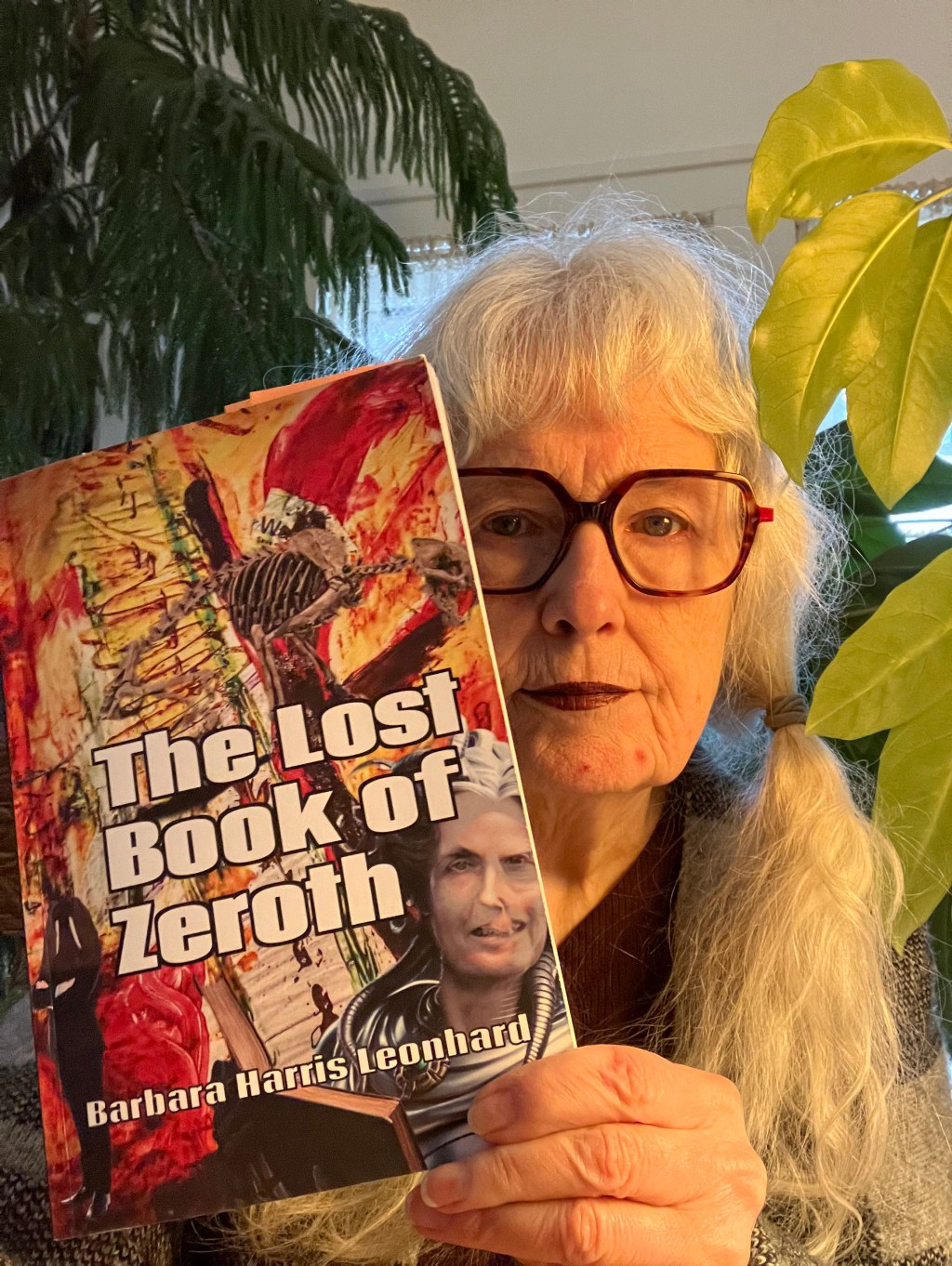

The following post has links to other post promos and poems from The Lost Book of Zeroth! Thank you, Alien Buddha Press for publishing my book!
On February 13, 2025, you can place your order for The Lost Book of Zeroth on Amazon. It’s $11.25 and only available in paperback format. Kindly rate and review! Thank you so much! You’re the best! 💃🏼💃🏼💃🏼
Praise for THE LOST BOOK OF ZEROTH
“Barbara Harris Leonhard’s latest poetry book, The Lost Book of Zeroth, is speculative yes, but so much more. Zeroth denotes a level of importance higher than the first, an importance so basic, yet so beyond. As she explores the relationships between AI, robotics, and humans, she is also exploring relationships within us, between us, our political landscapes, and each other. Cleverly arranged, poignantly expressive, forward looking, Leonhard not only addresses how our future will be entwined with AI and robotic helpers, but attaches emotions and personalities to these robots, speculating on their imaginary internal lives, jealousies, hopes. In the final chapter, “I, Human”, Leonhard’s poetry turns to the now while speculating on where we as humans are taking our world with such poems as “Unwombed Mary” and her thoughts on the current wars in Ukraine and Gaza. In her final poem, “It’s All About Death, Really”, Leonhard is “ready to shed the old clothes”. She states “My soul is no longer broken. It’s outgrown its fears. Cleansed & ready. Ready. For what’s next.” This is a book for NOW and for the FUTURE.”
Sharon SingingMoon, author of Random Seed and The Weight of One Hummingbird Feather
“In The Lost Book of Zeroth, Barbara Harris Leonhard uses humorous speculative poetry and fiction to imagine the world through the eyes of AI robots. While these robots claim they can protect us, teach us, and heal us, they do so based on their programming. Their moral and ethical choices, and what they can learn from those choices, are at the whim of their developers. As the pieces in this book point out, AI robots have a dark and threatening side. Although they can take on human jobs and give us time to indulge in our hobbies, they leave us with no way to make money and support ourselves and our families. We create AI robots. They reflect us, with all our good and bad qualities. If disaster strikes though these robots, we are the ones at fault. The pieces in this book are about us. You’ll find yourself thinking about the future as you read this amazing book.”
Nolcha Fox, Cancer Isn’t Just a Constellation, Words into Elephants, and many other poetry collections.
“It is the mark of a good writer to make us feel things; it is the mark of an excellent writer to reach, with empathy, across lines and pages into our heart. In The Lost Book of Zeroth, Barbara Leonhard shares that place of vulnerability, reaching out to us and letting us know we are still alive. We experience so much busyness that some have forgotten how to be human, as many of the poems and stories the first three chapters in The Lost Book of Zeroth explore. With her sharp wit, humor, and poetic reflection, Leonhard takes us on a journey through the advancement and absurdity of our world to a place where we go back to our roots to being, not human again, but soul. She tells us that she understands the dark places, and that even in them, there is light. It is a profound journey of the highest order for those of us who appreciate excellence in writing and in heart.”
Melissa Lemay, Mom with a Blog; Editor for Collaborature
“Barbara Harris Leonhard’s The Lost Book of Zeroth is about people and robots, hearts and batteries; the past, present and future; the possibility of a digital world; and the wonder of the natural world. It’s about January 6th, Tesla, Disneyworld, the war in Ukraine, Roe vs. Wade, and other social and political topics. Both sad and funny, this book is strikingly imaginative, with observations, laments, and comments on the world we share. Leonhard’s perfect robots reveal what we imperfect humans, for better or worse, have in common. The Lost Book of Zeroth, compassionate and bitingly satirical, views our world and points beyond through a feminist lens. There is no other book like it. Through personas such as Sophia, Eliza, and Little Spark, the poet does not extol the natural world over the virtual, but rather suggests the greatest mysteries are not in galaxies, but in the human mind and body, the human heart.”
Peter Mladinic, author of House Sitting and The Homesick Mortician


 Extraordinary Sunshine Weaver
Leave a comment