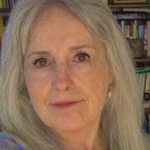

Thank you, Irma Kurti, for interviewing me!
Click the link to read/view Irma’s interview in Italian, or read this post for the English version. At the end of this post, I added a poem from Three-Penny Memories and a video of me reading it.
https://www.oceanonellanima.it/oceano/blogocn/blog_post.php?
The Interview in English
BARBARA HARRIS LEONHARD’S poetry is curated in various literary magazines and anthologies. She has received awards and honors from Well-Versed 2021 and Spillwords Press. She has been nominated for the Pushcart Prize and Best of the Net. Trending Poets named her Poet of the Year in 2023 and 2024. Some of her poems have been translated into Italian, Albanian, and Chinese.
Barbara is the editor for MasticadoresUSA, Latinos USA — English Edition, and her literary journal, FEED THE HOLY. Barbara Harris Leonhard has published four poetry collections. The most recent one is The Lost Book of Zeroth (Alien Buddha Press, 2025).
She’s written a best-selling poetry collection, Three-Penny Memories: A Poetic Memoir (Experiments in Fiction, 2022), about her relationship with her mother, who suffered from Alzheimer’s. Her blog is Extraordinary Sunshine Weaver. Barbara dreams of lasting peace. She lives in Mid-Missouri with her husband.
When and how did you first discover your passion for writing?
When I was 8 years old, I started to write poems and stories on memo pads. Although my writing wasn’t very good, my parents would ask me to read my creations to guests. I wish I still had those memo pads. I remember one memo pad where I recorded poem titles. In school, I gravitated toward opportunities to write poetry and fiction. I had supportive college professors in the English Department at Lake Superior College (now Lake Superior University) in Sault Ste. Marie, Michigan, who let students write poetry in lieu of essays. I was fortunate to be published several times in the college literary magazine, The Woodsrunner (now defunct). Life became very busy because I had to hold down jobs to pay for my higher education and living expenses. And I threw myself fully into my career and supporting aging parents. It wasn’t until after I retired that I could focus fully on my writing.
Do you remember the subject or inspiration behind your first poem or story?
In those early days as a developing poet, my inspiration came from my healing process after surviving measles encephalitis when I was 6, going on 7. In the summer of 1958, before the measles vaccine was available, I caught measles. My case was accompanied by encephalitis (brain swelling), which paralyzed me. I was unable to speak, walk, eat solids, or move my arms out for hugs. I went into a month-long coma. When I awoke from the coma, I was able to speak but not walk. The doctor pronounced that I would always need a wheelchair. Because I was lonely in the wheelchair, at the age of 7, I taught myself how to walk again. I would roll up to heavy furniture and pull myself out of the chair. Then I dragged myself from one piece of furniture to another, willing my legs to move. Somehow, this process helped me.
People may question why I had to struggle this way. In the 1950s, we had no physical therapy services, and no one at home helped me learn how to walk. First, they believed the doctor. Mom’s father was a surgeon whose word was gold. Mom taught us never to challenge a doctor. My parents were also very busy. Mom had to care for me, but she also had my 3 other siblings. Dad, an only child, was losing his father, so my parents traveled from Montana, where we were living, to Michigan to close up Dad’s family home. When they returned home, I ran up to greet them. My full recovery was considered a miracle, but if I hadn’t made the effort to walk, I would still be in a wheelchair. That traumatic experience led me to write poetry. But this story goes deeper.
When I was in the coma, I had a near-death experience. As I said, my paternal grandfather was dying. We were in the same hospital. I deeply loved Grandpa, and when my parents rushed me to the hospital, I thought I was going there to see him. I have a vivid memory of standing by his bed and laughing with him in his crowded hospital room. I was angry at the group of tall people gathered around. I assumed they were doctors because they wore white. We argued because they wouldn’t allow me to go with Grandpa. Then, suddenly, I opened my eyes under bright lights in a cold room. My parents and strangers surrounded me. A man told me to say, “The bear went over the mountain.” When I repeated it, he said, “She’ll be OK. But she will never walk again.”
The meeting I had with Grandpa was as solid and real to me as that last scene, when I awoke from the coma. Real and impossible. I was unable to speak or stand. How could I have visited with Grandpa and argued with the angels? I believe my visit had interrupted his meeting with his spiritual counsel. My recovery from encephalitis may have been part of a deal he made with the angels. Take me, but please spare her.
This illness sparked my first attempts at poetry at age 8 and years of reflection and study of encephalitis, which helped me realize the significance of this divine encounter.
Your poetry collection, Three-Penny Memories: A Poetic Memoir, has become a bestseller. What do you think is the “secret” behind its deep connection with readers?
Three-Penny Memories is a memoir about my mother, whom I helped when she was navigating Alzheimer’s, and me. As her second-oldest of seven children and oldest daughter, I assisted her a great deal with household tasks and caring for my youngest siblings, starting when I was 9. When I was 10, Mom almost died giving birth to her last baby. It took her a year to recover. When I arrived home from school, I helped to feed the babies and fold diapers. Yes, babies. My parents had 3 children and 5 years later 4 more. Of the youngest set, one was a toddler still in diapers, then a set of twins, and a year later, the last-born. We affectionately called them “The Little Ones.” I didn’t realize then that this time would be my only chance to mother.
After Dad passed away, Mom wasn’t taking care of herself. I begged her to choose a child to move close to. She chose me, and when I told her brother, he asked me a question that stopped me cold. “Do you love your mother?” I immediately started grief counseling to explore my relationship with Mom, and my therapy was writing poetry.
Mom and I were very close but also contentious at times. Three-Penny Memories explores the similarities and differences that created a dance around traumas. To be there for Mom in her final stage of life, I had to forgive her for wounding me. When I was in utero, Mom was prescribed Diethylstilbestrol (DES) to control bleeding. Although she said she didn’t finish the bottle of pills, the effects of the drug left me infertile and prone to cancer scares. I didn’t blame Mom for taking the drug, as she was following the doctor’s orders and didn’t want to miscarry. But for some reason, she often scolded me for not having children. That was the wound. Her grief over my infertility at her hand was transformed into blame on me.
One effect of the DES on my reproductive system was a T-shaped uterus, which could not support embryos. I had a miscarriage, which I kept secret from my parents because I felt I had failed. I still grieve the loss of that baby. If Mom hadn’t taken DES, I would have had children. As it was, caring for her reminded me of my own lack of a daughter. I admit I felt resentful because of the harm DES did to me.
On the other hand, Mom bore 7 children. Despite her bounty of births, she had a secret too: an abortion while a freshman in college. When I found out, I comforted her. I loved her regardless. At the same time, I grieved the loss of a big sister or brother. I needed to move past the judgments to open my heart to Mom in her hours of greatest need.
Of all your work, which book or piece do you feel the closest connection to?
I feel closest to Three Penny Memories because of the deep healing I experienced while compiling the poems. I wanted to be honest about my role as a daughter helping my mother, who was losing her memories and her intellect to Alzheimer’s. Many other accounts I read by children helping their failing parents show beautiful thoughts and deep gratitude. However, I am not afraid to admit that I often felt angry, upset, ungrateful, and unworthy. Readers comment on the sharp edge of my truth in this book. If we can’t tell the truth and look at ourselves honestly, how can we heal?
Alzheimer’s is a tragic condition. Watching Mom disintegrate before my eyes was difficult. Just as she cared for me when I had my brain injury (encephalitis), I was there for her. I held her brain in mine. Her calendar was my calendar. I carried her wallet in my purse. Still, I had a demanding full-time job, a husband, some hobbies. Her trauma opened old wounds. I’m certain she sacrificed a great deal to raise her children just as I was sacrificing for her. But in Three-Penny Memories, I took off the rose-colored glasses because I was still in the storm of grief and self-doubt. Did I love her? Could I do my best for her? Perhaps these were her questions as a parent who came to motherhood bearing her own grievances, guilt, and grief.
How can we heal unless we bring forth the pain and witness it fully?
As the editor of several international magazines, could you share what that experience has been like for you?
That same autumn when Three Penny Memories was published, I was invited to edit Masticadores USA, one of the first literary magazines under the Masticadores umbrella founded by Juan Re Crivello. At first, I was terrified by the prospect of working with authors to build a literary magazine. I was also in awe of the first editor, Gabriela Maria Milton, who had published my poetry in Masticadores USA. How could I fill her shoes? When I started in 2022, the magazine was 1 ½ years old. I began by posting daily and running several calls for submissions on social media. I now have a spreadsheet of almost 300 contributors. Juan created many other Masticadores magazines, each with one editor, and Latinos USA, a newspaper-like magazine with many columns and editors. As an editor for Latinos USA – English Edition, I have worked with the Poetry and Bookshelf columns. Currently, on Latinos USA – English Edition, I co-edit Revival with Nolcha Fox and Juan Re Crivello. We republish posts from Masticadores USA, Chewers, and Latinos USA.
In November 2024, I created Feed the Holy: A Literary Journal, where I publish poetry, short memoir, and flash fiction about our human journey. Duotrope picked up the journal immediately. I’ve been swarmed by submissions. As of today, the journal has almost 500,000 views and over 350 contributors. Although the title of the journal has the word “holy” in it, it isn’t a religious journal. The journal explores our human journey. The premise is that all aspects of life are “holy” – our joys as well as our sorrows. We carry happiness and grief in one hand. It’s a journal that explores healing, nature, and the soul, among other themes. In the call for submissions, Why Do We Feed the Holy, I share my grief in these chaotic times and invite others to share theirs. The response has been tremendous.
It gives me great joy to support writers and poets. The editing work is involved and all volunteer, but I thrive on it. I’ve met so many wonderful people. These online connections have offered me many opportunities worldwide.
~ END OF INTERVIEW ~
A Poem from Three Penny Memories: A Poetic Memoir
The Caregiver’s Craft

I’m only a human, Mom,
seeking perfection in my care for you.
Weaving the yarn, like you taught

and retaught. I keep forgetting
to practice. You say my head
is always in my books.

I anchor my hook
into a rhythm in each row,
putting the colors of your care in place.

Counting the stitches,
like the meter in a poem.
Casting off. Crocheting my lines.

Each stitch a thought, a memory, a discovery.
What am I crafting for you?
Comfort or chaos?

Will everything turn out?
I study the creation,
pleased. Some rows

proclaim symmetry,
coherence to form. I revel
in the virtuosity, clarity of hue

as though I have hooked
into radiance. But other rows
meander like a stream,

wandering around the bed rocks.
Threads in some rows, weeds,
tangled in the mud of past despair.

Memories to be forgotten.
Words that should have been
left unsaid. Plans gone awry.

Fitful dreams. Diminished hope.
As though gripping this hook
cripples my thinking. My loving.

Where am I heading, Mom?
Do I have it right yet?
Your care and wellbeing?

Being a doting daughter. Daunting.
I’m only a human
unraveling our knots.

© Barbara Leonhard
A video reading of “A Caregiver’s Craft” ~
Follow this link to purchase the book. Check out the many 5-star reviews!
Leave a Reply