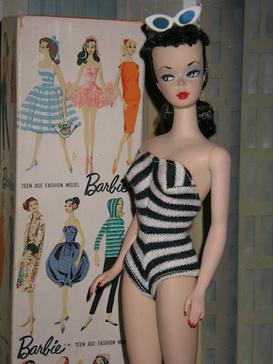
“My Memoir as a Doll” is a poem in my book Three-Penny Memories: A Poetic Memoir. I wrote it to express how I felt as a child paralyzed by measles encephalitis in the summer of 1958. I was six going on seven when my legs gave out one day. I was upstairs fetching something for Mom. Somehow, I dragged myself to the stairs and scooted down them. Before too long, I was unable to speak, stretch out my arms, or eat solids. My parents had to carry me, dress me, and feed me. I was dependent and helpless. The paralysis made me feel like a plastic thing to perch on the couch because carrying me up and down the stairs was exhausting. Life went on around me, and I felt lonely. My younger sister, only five, was unable to engage me.
I’m not sure how long I was at home in this state. I recall my parents rushing me to the hospital in Miles City—we lived in Lewistown, Montana. My grandfather was being treated for brain cancer there. I thought they were taking me there to see him, so my next memory was of me standing by his bed and talking and laughing with him. Standing around the bed were tall white figures whom I found myself arguing with. They said I couldn’t go with Grandpa. I insisted I wanted to. My next memory was waking up in a cold, brightly lit room. A man asked me to say, “The bear went over the mountain.” I was able to speak but not to walk. I had just recovered from a 30-day coma.
As I look back, I understand now that my visit with Grandpa was a near-death experience. Perhaps we were both in comas, and my survival was being negotiated by a spiritual counsel. For years, I believed my parents had taken me to Grandpa’s room. However, it would have been impossible for me to stand or speak! That encounter was my last memory of Grandpa.
It was a miracle I survived encephalitis without neurological damage. And I taught myself how to walk again at age 7. I believe I was spared because Dad had lost his mother the year before, his dad was dying, and I was stricken with encephalitis. The survival rate is low.
In this poem, I see myself as a Barbie doll because my name is Barbara, and the Barbie doll was in development when I fell ill. (She debuted in March 1959.)
I appreciate Yongbo Ma’s interest in my poetry! He has translated several of my poems. Here is the Chinese version of “My Memoir as a Doll”, and my English version follows. I appreciate Yongbo’s kind words: “I am fortunate to read and translate Barbara’s moving and restrained poem. The poet’s self-narration at the beginning, recounting her painful early experiences and the miraculous experience of salvation, deepened my understanding of the poem itself.”
我作为洋娃娃的回忆录

I.
记忆,因脑炎破裂的气泡。
神经元,因病毒性浮肿而淹溺。
我紧抓住这些场景。明尼苏达。

一个婴儿,第一次触碰雪花。
一个蹒跚学步的孩子,在椅子上摇晃。
我那只有我能看到的宠物狗。

幼儿园,小厨房。
锅碗瓢盆,烤箱。
指挥男孩们。我们难堪“丈夫”。

廉价饮料和饼干。
围坐成圈的故事时间。
编织地毯上的午休时间。

II.
搬到蒙大拿。
哈蒂奶奶中风。
她的房间就在厨房旁边。

妈妈负责照顾她。
我们发现奶奶
在我上学第一天去世了。

那天我走进一年级教室时
恐慌发作。
老师高大的办公桌

像一头灰熊。它滚烫的气息
烧灼着我的肺,熔化了悲伤。
有一天,妈妈让我上楼。

另一项差事。我的腿
撑不住了。楼梯成了我的
珠穆朗玛峰。我滑了下来。

喊妈妈。我无法走路,
伸手求抱抱,说话,吃固体食物。
妈妈喂我婴儿食品。我成了她托来托去的洋娃娃。

沙发,我的新床。方便。
厨房里传来欢声笑语。人们
从我布满灰尘的瓷器外壳旁经过。

孤独。无助。妹妹
想来看我。我脑子里清晰的话语,
对她却成了含糊的哑语。我变得沉默了。

一天夜里,父母匆忙赶回家。
兄弟姐妹们的眼神让我害怕。
冷冰冰的车。妈妈的怀抱。黑暗。

III.
我去看爷爷,他住在同一家医院。
我站在他床边。我们交谈,笑着。
我想和他一起走。

那里的人说:“不行。”
我争辩。他们坚持让我回房间。
我用眼神责备他们。

我不知道这些穿白衣的高大身影是天使。
我的灵魂因这些神圣的劝诫得以幸免,
而爷爷的灵魂却被带走了。

IV.
我在寒冷灼热的
天堂醒来。白色身影徘徊。
我重复他们的祷告。他们欢呼着

拉动线绳
将这个瘫痪的芭比
摆在床单下。

V.
坐在轮椅上回家。
人们在等着。派对。
礼物。我一直梦寐以求的茶具。

他们在我身旁议论我。我隐形了。
依旧被抱着、清洗、穿衣。
父母的感激

与悲伤。我外面的朋友。我想念
微风与揶揄。奔跑。
捉迷藏。炎热明媚的日子。

VI.
回学校晚了。二年级。
病怏怏的芭比。被迫坐在走廊里。
孩子们飞快地从我身边跑过。

学得慢的芭比。注意力不集中。
记忆力差。不停地哭。
脑炎的后遗症。

现在我成了“异类”。没有朋友。
一个可以轻易嘲笑的对象。残忍的标记。
对我来说,这不是生活。不是现在。

太年轻,不能像易碎的芭比那样受苦。太年轻,
不能被困在空空的塑料外壳里,
摆在这把轮椅中。

我的灵魂呢?我的声音呢?
我的力量呢?我的意志呢?
我呼唤它们回到它们的鬼魂身边。

Here is my English text.

My Memoir as a Doll

I.
Memories, bubbles burst by encephalitis.
Neurons, drowned by viral swell.
I cling to these scenes. Minnesota.

A baby, touching snow for the first time.
A toddler, rocking in a chair.
My pet dog no one else can see.

Kindergarten, the little kitchen.
Pots, pans, dishes, an oven.
Bossing the boys. Our heckled husbands.

Kool-Aid and cookies.
Story time in a circle.
Nap time on braided rugs.

II.
The move to Montana.
Grandma Hattie’s stroke.
Her room off the kitchen.

Mom, her caregiver.
Our finding Grandma
passed away on my first day of school.

My panic attack while entering
the First Grade classroom that day.
The teacher’s desk, looming up

Like a grizzly. Its hot breath
burns my lungs, molten grief.
One day, Mom sends me upstairs.

Another errand. My legs
give out. My Mount Everest,
the stairs. I descend with a slide.

Call to Mom. Unable to walk,
to reach for hugs, to speak, to eat solids.
Mom feeds me baby food. I’m her doll to haul.

The couch, my new bed. Convenient.
Joyous sounds from the kitchen. People pass by
my dusty porcelain shell.

Loneliness. Helplessness. My sister
tries to visit. My words, clear in my mind,
befuddled squawks to her. I grow mute.

My parents rushing home one night.
My siblings’ eyes frighten me.
The cold car. Mom’s lap. The blackness.

III.
I get to see Grandad, who’s in the same hospital.
I’m standing by his bed. We visit
and laugh. I want to go with him.

The people there say, “No.”
I argue. They insist I return to my room.
I scold them with my eyes.

I don’t know that these tall figures in white.
are angels. My soul is spared
for Grandpa’s by this holy counsel.

IV.
I awaken to the cold blast
of a burning heaven. White figures hover.
I repeat their prayers. They rejoice

about pulling the strings
and pose this Paralyzed Barbie
under a sheet.

V.
The return home in a wheelchair.
The people waiting for me. The party.
The gifts. A tea set I’ve always wanted.

They speak over me. I’m invisible.
Still carried, washed and dressed.
My parents’ gratitude

and grief. My friends outside. I miss
the breeze and tease. The running.
Hide and Seek. Hot sunny days.

VI.
Late back to school. Second grade.
Diseased Barbie. Forced to sit in the hall.
Kids run past me quickly.

Slow Learner Barbie.  Lack of focus.
Poor memory. Constant crying.
Effects of encephalitis.

Now I’m “other”. Friendless.
An easy target for teasing. Cruel remarks.
For me, not this life. Not now.

Too young to suffer as Fragile Barbie. Too young
to be cast into an empty plastic shell,
posed in this wheel chair.

Where’s my soul? My voice?
My strength? My will?
I call them back to their ghost.

*****

Yongbo Ma was born in 1964. He has a PhD and is a translator, editor, and leading scholar of postmodern poetry. He has authored or translated more than 80 published books. Ma is a professor in the Faculty of Arts and Literature at Nanjing University of Science and Technology. His translations from English include works by Walt Whitman, Emily Dickinson, Ezra Pound, Wallace Stevens, W.C.Williams, John Ashbery, Herman Melville and others. You can follow him on Facebook. https://www.facebook.com/profile.php?id=100093276516900.
Other Translations by Yongbo Ma

https://www.amazon.com/Three-Penny-Memories-Barbara-Harris-Leonhard-ebook/dp/B0BH99FS2T/ref


 Extraordinary Sunshine Weaver
Leave a comment